Before I start reading "The Curious Incident of the Dog in the Night-Time", I'm going to make some predictions about the book.
From what I've heard about the novel, I know that the main character is Christopher Boone- an autistic boy who loves Sherlock Holmes mysteries. Christopher is a math genius, but like most autistic people, has very little social skills, making it difficult for him to carry on conversations with people.
 |
| Wellington |
I predict that not all the things that Christopher finds will help him figure out who killed the dog. I think that a lot of his discoveries will reveal more about the people of the town than they will about his neighbor's dog and how it died. I think that Christopher will find things he doesn't like and never expected and a good part of the story will focus on how he deals with and processes the new information.
I think that this novel is just as much about Christopher finding out who killed the dog as it is about him finding out things about people that nobody knew or ever could have predicted. I think the story will be more about Christopher's personal growth and how everybody has secrets.
Halfway Through Book
 |
| Christopher's Book |
The book started off with Christopher finding his neighbor, Mrs. Shears', poodle dead on her lawn. She comes outside and seeing Christopher holding her dead pet, promptly freaks out and calls the police. Christopher stays with the dog until the police arrive to take him away. One of the police officers grabs Christopher's shoulder and because he doesn't like to be touched, Christopher hits him. After that, he spends some time in a police cell down at the station until his father comes to get him. On the way home from the police station, Christopher's dad tells Christopher not to try and find out who killed Wellington. He's angry and worried that Christopher will get himself into trouble. But Christopher, under the guidance of a teacher at his school (Siobhan) decides to investigate and find the murderer anyway, without telling his father. He also decides to write a book about his adventure. From there, the book mostly covers Christopher sneaking around and asking questions. About a third of the way in, he finds out that Mr. Shears and his mother had an affair and that Mr. Shears no longer lives with Mrs. Shears (his neighbor). Christopher's dad says that Mr. Shears is an evil man and he never wants to hear his name in the house ever again. Christopher's dad finds his book and angry, throws it away. But when Christopher goes looking for it, it isn't in the garbage. Instead, he finds it upstairs, in a box in the bottom of his father's closet. Underneath the book are 43 letters, all addressed to Christopher from his mother. This confuses Christopher because his mother is supposed to be dead. He takes one of the letters and reads it, finding that it is dated 18 months after his mom "died". Curious, Christopher goes back to the box six days later and starts reading through the rest of the letters. This is when he realizes that his mother isn't dead- that she ran away with Mr. Shears and his father had lied to him. When his dad comes home and finds him reading the letters, he decides to tell Christopher the truth about everything. He admits that he lied to Christopher but he didn't mean to and that he was going to tell him, when he was older. Then he says that he's going to tell him something else, and after that, he won't lie to him anymore. Christopher's father then admits that he was the one who killed Wellington. He says that he did it because he was jealous that Mrs. Shears cared more about the dog than him and Christopher. He says he didn't mean to and he regrets it. He then tries to give Christopher their version of a hug- similar to a high-five- but Christopher screams and pushes him away. Angry, hurt and confused by what he's learned, Christopher waits until his father's asleep and then sneaks out of the house with his pet rat, Toby, his special food box and two coats. Then, he squeezes between the shed and the fence and waits as he tries to sort things out.
 At this point, I can see that Christopher is very logical and rational-minded. He never lies and has a hard time dealing with it when other people do. He likes things to be constant and steady and wants to know what is going on all the time. The fact that there were things he didn't know that people were keeping from him scares him. It's very hard for him to deal with something as big and confusing as this. At this point, I can see that Christopher is very logical and rational-minded. He never lies and has a hard time dealing with it when other people do. He likes things to be constant and steady and wants to know what is going on all the time. The fact that there were things he didn't know that people were keeping from him scares him. It's very hard for him to deal with something as big and confusing as this. So far, it's a really good book and I'm excited to read more. |
Finished the Book
Now that I've read the whole book, I have a few thoughts on it.
 |
| Swindon Train Station |
The end of the book sees Christopher making significant personal growth, building stronger relationships with his parents and moving past the events that occurred earlier in the book. We see Christopher learn to deal with what he'd discovered before. We even see his parents start to mend their own relationship. They don't move back in with each other, but they do try to work together to support and raise their son. Basically, it was a happy ending.
Book Review
The book "The Curious Case of the Dog in the Night-Time" by Mark Haddon is a book about a 15-year old autistic boy named Christopher Boone and his investigation into the murder of his neighbor's pet poodle, Wellington. The book also focuses on Christopher's personal growth, both with his internal struggles, and with his relationships with the various other characters in the novel.
The book is written in a very unique style, the story told from Christopher's point of view. This shows the reader a different perspective; the entire book is seen from the eyes of an autistic boy, a condition that colors everything he sees and does. The book gives readers an inside look at what autism is like, and how differently this main character thinks than others do.
The book had an excellent plot, plenty of surprises, and was told from a point of view that was at times funny, and at others, confusing. But it was always interesting. Christopher always had something new to say and would occasionally devote whole chapters to explaining some small detail he had mentioned in earlier chapters. This made the book even more interesting, since you learned a lot of new and interesting information from these chapters. Christopher knows a lot, and with the story told by him, you get a small taste of what he knows and how he thinks. It was also fun to try and work through the problems Christopher presented, such as his A-level math question and the Monty Hall Problem.
Overall, "The Curious Case of the Dog in the Night-Time" had a great plot, unique characters and was well written. I would recommend it to anyone, particularly people who are interested in reading a story told from a completely new and unique viewpoint.
4 stars out of 5.
Similar Works
"The Curious Incident of the Dog in the Night-time" is a very unique novel. I have never read another book, seen another movie, or heard of any other similar works. However, the book is similar to the movie "A Beautiful Mind", which followed a socially inept genius mathematician. However, the main character in that movie suffered from schizophrenia, and the movie was more about that than anything else. But, it did show similar scenes, highlighting the main characters' social awkwardness and unique way of thinking.
In some ways, the novel was also similar to a character on Criminal Minds- Dr. Spencer Reid- who is an autistic genius with an eidetic memory and an incredible ability to read 200 000 words a minute. Dr. Reid, like Christopher, is incredibly smart, especially in subjects like math and science. However, he also has a very hard time talking to and interacting with people. He has trouble talking in front of crowds and is uncomfortable in most social situations. Christopher and Dr. Reid are very similar in this sense, however, Criminal Minds is a show about FBI profilers who work to catch criminals, so the focus isn't really on the autistic genius.
These are two other works that feature similar characteristics as the ones seen in my novel, however, I have never encountered another work that has a similar storyline or character.
Major Themes
There are quite a few themes that Mark Haddon touches on in his novel. However, some of the main ones are relationships, identity, and independence. Since the story is told from Christopher's point of view, there is also focus on an autistic person's way of thinking.
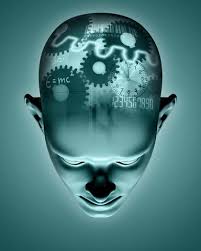 Relationships play a large role in the story in the sense that the book follows Christopher and his relationships with the people around him. In parts of the book, you can also see the strain certain events put on these relationships. This theme also ties in with Christopher's analytical, logical way of thinking. Christopher is unable to emphasize with others, and his relationships with people are often strained by this fact. This reminds you that even though Christopher's condition gives him amazing abilities, it also makes it hard for him to have healthy relationships with other people.
Identity is also a major theme if the novel, seen in Christopher's struggle to understand his father, his mother, their relationship, and the lies he's been told. Throughout the book, Christopher struggles with the new information he's learned. The fear of what he didn't know changes him, and a lot of the story focuses on him trying to process and deal with what he's found out. The book is very much about Christopher growing as a person.
Independence is probably the biggest underlying theme of the novel. Throughout the book, Christopher makes references to his wish to be alone. He doesn't like dealing with people or being in social settings, so being alone and independent is one of his greatest wishes. Throughout the duration of the book, we see Christopher steadily grow more and more independent; investigating on his own, buying a ticket and boarding a train, and making his way to his mother's house in London. By the end of the book, Christopher has changed. He sees things differently then he did in the beginning. He believes he can do anything. His solo trip to London has given him the belief that he can do anything he wants to. He talks about the future, about living alone and being independent. He thrives off the idea of living alone. In many ways, the book is the story of Christopher's growing independence.
Literature Circle One: Setting
"The Curious Incident of the Dog in the Night-time" is a very unique novel. I have never read another book, seen another movie, or heard of any other similar works. However, the book is similar to the movie "A Beautiful Mind", which followed a socially inept genius mathematician. However, the main character in that movie suffered from schizophrenia, and the movie was more about that than anything else. But, it did show similar scenes, highlighting the main characters' social awkwardness and unique way of thinking.
| Dr. Spencer Reid |
These are two other works that feature similar characteristics as the ones seen in my novel, however, I have never encountered another work that has a similar storyline or character.
Major Themes
There are quite a few themes that Mark Haddon touches on in his novel. However, some of the main ones are relationships, identity, and independence. Since the story is told from Christopher's point of view, there is also focus on an autistic person's way of thinking.
Identity is also a major theme if the novel, seen in Christopher's struggle to understand his father, his mother, their relationship, and the lies he's been told. Throughout the book, Christopher struggles with the new information he's learned. The fear of what he didn't know changes him, and a lot of the story focuses on him trying to process and deal with what he's found out. The book is very much about Christopher growing as a person.
Independence is probably the biggest underlying theme of the novel. Throughout the book, Christopher makes references to his wish to be alone. He doesn't like dealing with people or being in social settings, so being alone and independent is one of his greatest wishes. Throughout the duration of the book, we see Christopher steadily grow more and more independent; investigating on his own, buying a ticket and boarding a train, and making his way to his mother's house in London. By the end of the book, Christopher has changed. He sees things differently then he did in the beginning. He believes he can do anything. His solo trip to London has given him the belief that he can do anything he wants to. He talks about the future, about living alone and being independent. He thrives off the idea of living alone. In many ways, the book is the story of Christopher's growing independence.
Literature Circle One: Setting
Today, for our literature circle discussion, we talked about setting.
| Swindon, Wiltshire |
| Christopher's Neighborhood |
Mark Haddon used setting to demonstrate how differently Christopher's mind works as well as to indicate where Christopher is when he is investigating Wellington's murder. In the case of this book, setting is not as important as the other parts of a story.
Literature Circle Two: Character
For our second literature circle, we discussed the characters of The Curious Incident of the Dog in the Night-Time.
The main character of the book is Christopher Boone, a 15-year old autistic boy who loves math and Sherlock Holmes. The story is told from Christopher's point of view and centers around him, his life, and his investigations. Another main character is Christopher's father- a single parent attempting to raise his autistic son alone. He loves Christopher and tries to keep him safe, but the things he did to protect Christopher end up coming back and hurting their relationship later in the novel.
| Christopher Boone |
 |
| Toby the Rat |
The characters of the book are important because most of them helped Christopher solve either Wellington's murder, or unknown facts about Christopher's own life. Characters were also used in the book to demonstrate how Christopher finds people confusing and has to try and understand everything they do. Since the story was written form Christopher's point of view, characters are often dissected; their movements, facial expression, speech, clothing and interesting things about them all noticed by Christopher. He will then proceed to try and figure out what the person means, or is doing and how he feels about it. With the use of different characters, we can clearly see how differently Christopher's mind works, making the story different and enjoyable to read. Mark Haddon did a very good job telling the story from an autistic boy's point of view. Different characters were only one of the methods he used to demonstrate Christopher's differences- which were the things that made the book a unique and interesting read.
Literature Circle Three: Conflict
For the third literature circle, the topic was conflict in our novel.
In our book, there were a few examples of conflict. Some of it was internal conflict- Christopher struggling with his own emotions and self-imposed rules. Some was external- when Christopher fought with his dad or mom and when he found himself fighting against different characters in the story, such as the police officers and train officials.
 |
| Personal Growth |
Conflict is an important part of any good story. In The Curious Case of the Dog in the Night-Time, conflict was used to demonstrate Christopher's different way of thinking, processing information, and reacting to different situations. It was also used to show how, over time, Christopher's view on people and things, as well as his relationships with them, changed. The most prominent and important use of conflict in the novel was to show Christopher's personal growth in both his personal and social lives.
Literature Circle Three: Conflict Questions
1. Name which types of conflict appear in the novel (external/internal).
Both types of conflict appear in the novel.
2. Give an example of internal conflict in the story.
In the novel, Christopher struggles with his own emotions. He doesn't know how to process and deal
with the information he discovers and a good part of the story is dedicated to following Christopher's
personal growth as he attempts to deal with what he's learnt.
3. Give an example of external conflict in the novel.
In the book, Christopher struggles with his dad. Christopher wants to find out who killed Wellington,
but his dad, who is trying to protect him, wants him to stop investigating and prying into other people's
lives. He was also upset by Christopher's actions because it was him who had killed Wellington in the
first place. One of the major problems in the story was Christopher's father interfering with and
forbidding Christopher's work on his "case".
4. Which type of conflict appears more in the story, external or internal?
Both types of conflict are featured prominently in the story, but internal conflict does appear more. It is
also given more focus, since the book is told from Christopher's point of view. This means that
Christopher's emotions, thoughts, and struggles are seen more than the external problems featured in the
novel.
5. Describe some other internal conflicts in the novel.
Some of the other internal conflicts in the novel include Christopher's father, who throughout the novel, is struggling with his emotions over Christopher and his investigation, and lingering feelings of hatred towards
Mr. Shears and his own wife. Through Christopher's eyes, and through the letters and stories Christopher
finds, it becomes apparent that Mr. and Mrs. Boone dealt with many struggles and marital problems
throughout their relationship, which ultimately ended in his mother leaving with her lover. In the book, we
see his father's emotional struggles as he tries to raise Christopher alone and maintain the story he told to
Christopher to protect him.
6. Describe some other external conflicts in the novel.
Other internal conflicts in the novel include Christopher's struggle to solve Wellington's murder. As he tries to question people, he faces all sorts of trials, in the form of the people he talks to and their
willingness/unwillingness to speak to him. This makes it much harder for Christopher to solve Wellington's
murder. We also see more external conflict in Christopher's relationships with his teachers, parents and
neighbors. He has no relationship with his mother for most of the book, strained relationships with some
neighbors, a relationship built partially on major lies with his father, and a closer relationship to his
teachers, particularly Siobhan, who is his primary teacher. His strained relationships cause tension and
problems when he attempts to investigate into Wellington's murder.
7. What was the most major conflict in the novel?
The biggest conflict in the novel was Christopher's internal struggle to deal with the information he discovered while investigating. It took up most of the book, since Christopher spent all his time trying to
solve his case, and continued to come up with new information that contradicted everything he had been
previously told.
8. Why do you think there was such a major focus on Christopher's internal struggles?
Since the novel was told from Christopher's point of view, it is logical that a good portion of the story be focused on how he deals with the events in the book.
9. Which of the conflicts in the novel was more important: internal or external? Why?
We feel that both conflicts were equally important to the story. Since the story focused on Christopher
and his personal growth and progress in many aspects of his life, the internal conflicts are crucial in
showing this growth. But without the external conflicts, the internal ones wouldn't have happened. You
need both types to make a good story.
10. In your opinion, why is conflict such an important part of any story?
Conflict is important in any story because conflict is basically what lends to the plot. Conflict also
creates more drama and tension in the story and can be effectively used to keep the reader in suspense
and keep them coming back the book and potentially, the series. Internal conflict also serves to endear
the character to the reader, or in some cases, stir up other feelings. It makes the reader feel more
connected the characters and the story, and without it, the novel is likely to be boring and dry.
Literature Circle Four: Theme
 In our book, the major theme is the struggle for independence. Christopher is most comfortable alone, and he often says that one of his favorite things to imagine is that he is all alone; the last person left of Earth. This is comforting for him, since he feels that people are confusing and scary. Christopher talks briefly about his future. He wants to live alone; be independent and support himself. In many ways, the book is about Christopher's path to independence. His personal growth is a huge part of the novel. You see Christopher as he is in the beginning- still just dreaming of his independence. Then, as the story progresses, he becomes less dependent on other people; travelling all the way to his mother's house in London by himself. This solo journey gives Christopher confidence in himself. He believes he can do anything and by the end of the book, is looking forward to the future.
Brianna! Good commentary about your circle topics. Keep it up - this is an important part of your summative. :) Ms. Morton
ReplyDeleteYour description of the characters was really spot on, especially concerning the father's motives and feelings. You also depicted Christopher's analytic dissection of each character perfectly and the way he interacts. Good job!
ReplyDelete-Melissa Hawco
Brianna! I love your section on similar works ! I do agree that criminal minds's character Spencer Reid does think like Christopher ( of course since they are geniuses).
ReplyDelete- Amal
aha thanks guys :)
ReplyDelete-Brianna
Brianna I liked what you said about relationships playing a large role in the novel and how identity is also a major role in theme. It is true that the whole Boone family has relationship problems; Ed and Judy’s failed marriage, Ed and Christopher’s trust loss, and Judy being able to cope with Christopher’s emotions. For identify I believe that you are right when you said that the novel is based on Christopher’s growth as a person
ReplyDelete-Khunsha
I like your point on setting that the setting must be noted to show where Christopher's investigations take him.
ReplyDelete- Amal